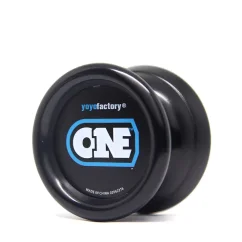
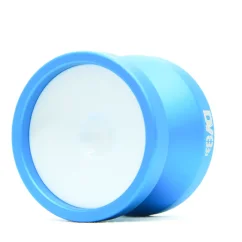
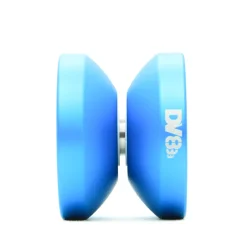
YoYoFactory One - Plastic Yoyo
In stock
12,28 EUR
Rating value is 5 of 5
Add to Cart
| Color |


|
|---|
Choosing a yoyo is important. With hundreds of models available today, the best choice depends mainly on your experience and skill level.
If you are completely new to yoyoing, or have only tried a yoyo a few times, we recommend starting with a responsive beginner yoyo. These yoyos automatically return to your hand with a simple tug, making it much easier to learn the basics and your first tricks.
Responsive yoyos are designed for beginners because they return automatically when you tug the string.
We do not recommend starting with an unresponsive yoyo. These models return using the Bind trick and require good throwing technique and basic string control before they become enjoyable.
As you become more experienced, you'll discover that every yoyo feels different. Some players prefer heavier and smaller models, while others like wider and lighter yoyos.
That is why there is no single "best" yoyo. The best one is simply the one that feels right for you. The more models you try, the easier it becomes to find your favorite.
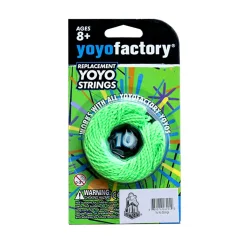
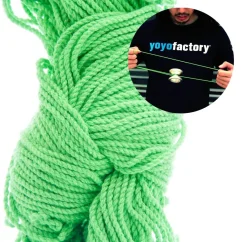
The good news is that all modern yoyo strings fit all modern yoyos. No matter which brand or color you choose, you can use it with any yoyo in our shop.
The biggest difference is not compatibility, but the material and thickness of the string, both of which affect how your yoyo feels during play.
Most modern yoyo strings are made from polyester, which offers excellent durability and consistent performance.
Cotton strings are rarely used today because they wear out much faster. Some brands also offer blended materials or nylon strings, each providing a slightly different feel while playing.
You can choose any color you like, but we highly recommend using a bright, highly visible string. It makes the yoyo easier to see against different backgrounds and helps spectators follow your tricks.
Your clothing also makes a difference. A white string on a white T-shirt is difficult to see, while a bright yellow string paired with a dark shirt creates excellent contrast.
Have you just received your first yoyo? Great! Most yoyos already come with a string attached or packed inside the box.
The string has two ends. One end has a loop, while the other does not. Pass the non-looped end through the loop to create a finger loop, then place it on your middle finger just behind the first knuckle.
We recommend tightening the finger loop so the yoyo cannot accidentally slip off your finger.
The other end of the string wraps around the bearing. For most players, the ideal string length reaches from your navel to the floor.
After practicing for a while, your finger may become slightly sore where the string sits. This is completely normal, and a small bandage or sports tape can help during your first sessions.
Before throwing, make sure the string runs from your finger to the top of the yoyo, not underneath it.
Wind the yoyo up, hold it in a closed fist, and throw it straight down using your wrist. Once it reaches the end of the string, turn your palm downward slightly and give a small tug to bring it back into your hand.
The most common mistake is simply not throwing hard enough. A stronger throw creates a longer spin time, makes tricks easier, and helps the yoyo return more consistently.
Don't be afraid to throw with confidence—modern beginner yoyos are designed for it.
When the yoyo stops spinning, simply keep the finger loop on your finger and wind the string back around the yoyo. After a few turns, you can let go of the loop and continue winding normally. The string will untwist naturally during your next throw.
1A is the most popular yoyo style and the one where almost every yoyer starts. One yoyo is attached to a string connected to one finger, and the focus is on creating tricks with the string.
Most modern yoyo designs are created for 1A, making it the largest and most diverse style in the yoyo world.
2A uses two responsive yoyos, one in each hand. This style focuses mainly on looping tricks, where the yoyos continuously travel around your hands.
2A requires special yoyos designed specifically for fast and consistent looping.
3A uses two unresponsive yoyos, one in each hand. It is one of the most technically demanding yoyo styles because it combines advanced string tricks with the challenge of controlling two yoyos at the same time.
5A, also called freehand, replaces the traditional finger attachment with a counterweight. The yoyo is free from your finger, allowing completely different movements and creative trick possibilities.
Skill toys are not limited to yoyos. Disciplines such as spin tops, kendama, and other object manipulation toys are also part of this creative world and share the same focus on skill, practice, and progression.
| Color |
|
|---|
| Color |


|
|---|
| Color | Green |
|---|
| Color |


|
|---|